
Arrendar terreno: prepara la inversión y la salida
Watch the explanation and read its transcript on Arrendar terreno: prepara la inversión y la salida. To continue your review, also read Contrato de obra prefabricada: alcance, pagos, cambios y entrega and Glamping y turismo en un lote: uso del suelo, infraestructura y operación.
Video, transcript and related readingThe agreement should explain both how the project starts and what happens to the land and improvements when it ends.
Start with the regime, not just any template
Leasing land for cultivation, a home, business activity or a future investment raises different situations. Law 820 of 2003 regulates urban housing tenancy; it should not automatically be applied to a rural plot or every prefab arrangement. The Civil Code contains general lease rules and provisions on rural land. Identify with a professional which regime applies to the actual use and agreement.
That choice affects guarantees, rent, adjustments, notices and termination. A guidance model should therefore not fill in supposed statutory percentages or periods merely because the arrangement is called a lease. Describe the land and objective first. If farming, shared produce, services or partnership arrangements are involved, explain the full structure to an adviser: it may require a different analysis from a simple temporary right of use.
Check who can grant the use
Identify every party and the capacity in which they act. Where a company, representative, co-owner or someone with limited powers is involved, request suitable evidence. Capacity, consent and representation are not established simply because someone shows the land or accepts payment. Compare documents and ask who must authorise the agreement and works, without treating receipt of a document as validation of its contents.
The property title-history certificate helps collect registry information for review, but does not replace a case assessment. Identify registration number, title, restrictions, occupants and the relationship to the area to be leased. If only part is granted, attach its boundaries and access. A visible fence does not by itself prove access rights or that the whole stated area belongs to the same property.
Make the term and economics understandable
Define when the term starts and whether that depends on handover, permits, connection or another condition. Describe how the condition is evidenced and what happens if it is not met within the agreed limit. Separate duration, extension, renewal, notices and grace periods. A number of years does not settle a delayed start or early exit. Do not assume renewal where the agreement and applicable regime have not clarified it.
Rent should specify currency, frequency, due date, payment method and beneficiary. Document the formula, base, source and date of any adjustment; where calculated by area, identify the area used. Allocate utilities, maintenance, connections, insurance, taxes and previous debts without pretending to change statutory obligations to authorities. An attractive rent should not hide the cost of using and eventually returning the land.
Permission for works does not settle who keeps them
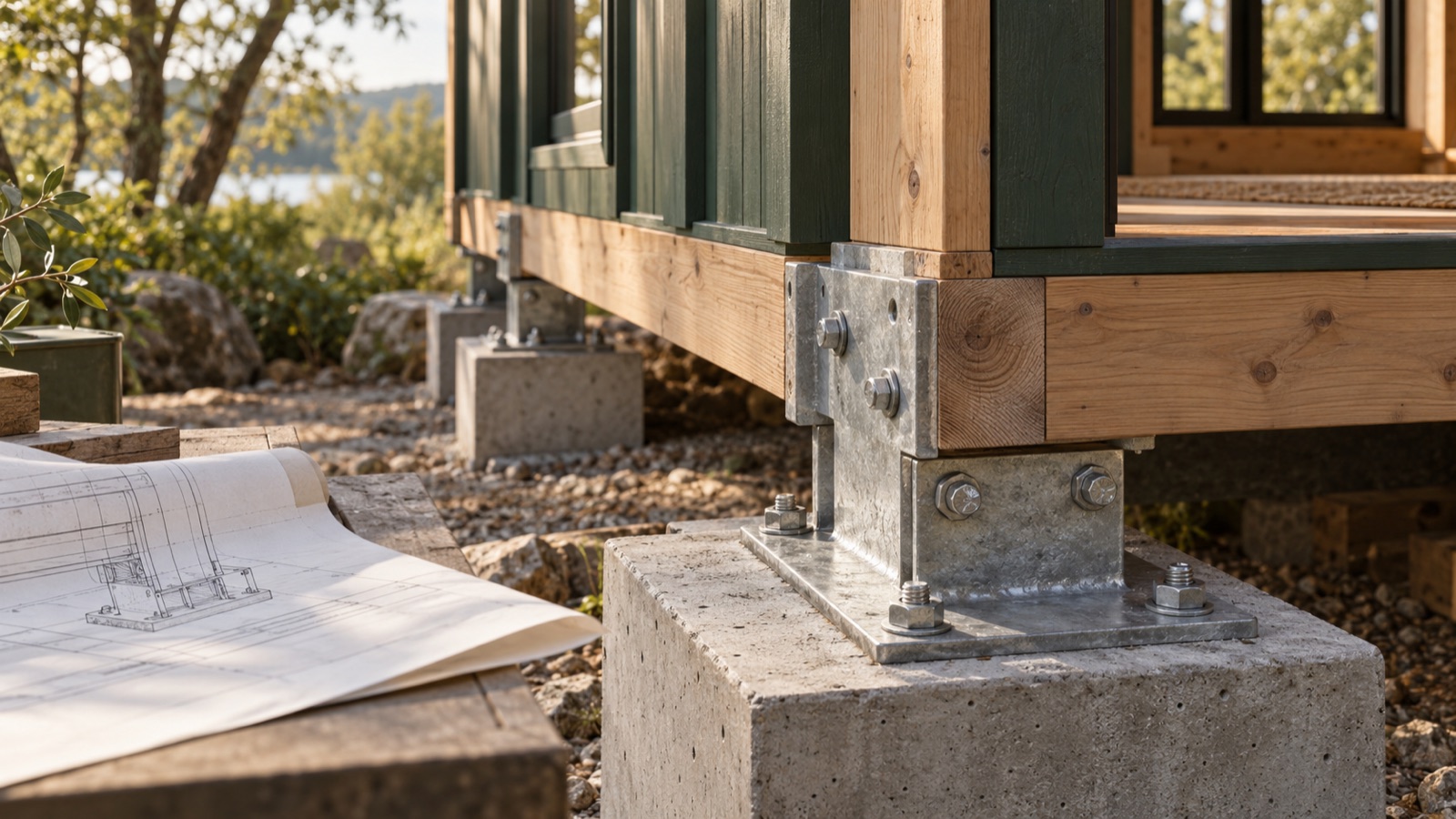
For a prefab project, distinguish owner authorisation, public permissions and technical conditions. Signing a lease does not grant a licence or confirm land-use compatibility. Record the authorised project, responsibilities and consequences of changes or refused permissions. Do not commission foundations merely on the assumption that the module can be removed: the ground, installations and supporting works also need an end-of-term solution.
Civil Code articles 1993 and 1994 distinguish necessary repairs and useful improvements under their conditions. Permission to install should not be treated as an automatic promise of reimbursement. Identify each improvement, financing, legal treatment, possible retention or removal, compensation and return condition, and have those terms reviewed. The outcome may differ for the module, foundations, utility lines, fencing and site works; an inventory is more useful than one broad statement.
A long term does not guarantee protection against third parties
Consider a change of owner, expiry of the landlord's rights or creditor involvement. Civil Code article 2020 distinguishes situations where third parties must respect a lease and gives significance to form and, in certain cases, registration and its timing relative to mortgages. A long private agreement therefore should not be described as automatically binding every buyer or creditor. That protection needs a case-specific legal assessment.
Take the certificate, title, project and planned investment to an adviser and ask which formalities or measures are appropriate. Turning a document into a public deed or registering it does not automatically resolve every risk. Review must consider powers, restrictions, chronology and applicable regime. If the budget relies on many years of occupation to recover an improvement investment, discuss this before funding installation rather than after a dispute arises.
Document entry, exit and outstanding items
Prepare an initial record with boundaries, condition, inventory, photographs, utilities and observations. On return, record what is handed over, meter readings, keys, work, removal or retention of structures and disagreements. Article 2005 addresses return while recognising deterioration from legitimate use; avoid a generic statement treating every difference as an accepted damage claim. Record responsibilities, deadlines and reservations for outstanding reviews or repairs instead of a blanket release.
Our downloadable lease and handover models help prepare that discussion, with spaces and no preset decisions. Add annexes and obtain local professional review: they are not contract approval or plot validation. Keep complete copies and distinguish received documents from checked documents. Good organisation does not eliminate disagreements, but helps establish what was discussed, agreed and remains unresolved.
- Regime, parties, powers, area and intended use identified.
- Economics, permissions, improvements, third parties and exit reviewed.
- Records, annexes, sources and reservations kept without assuming unknown information is validated.
Test an investment with a defined exit
As a hypothetical example, imagine installation with COP 60,000,000 of improvements and an estimated COP 8,000,000 for removal and reinstatement at the end. The initial improvement budget alone does not show those COP 68,000,000 of commitments. A desired eight-year term also does not establish full occupation, investment recovery or compensation. Separate rent, assembly, maintenance, removal and contingencies and ask what happens if use cannot begin or ends early. These illustrative amounts are neither quotations nor a rule about duration or amortisation. The inventory should distinguish elements potentially removable without damage, works remaining and costs whose allocation needs a reviewed agreement. If the economics depend on selling the module or future compensation, keep those assumptions visible rather than treating them as guaranteed money. Take the agreement, evidence of the lessor’s right and improvement conditions to an adviser to assess continuity, third parties and exit. The purpose is to connect investment with actual obligations rather than turning a negotiated period into automatic protection. Update the budget when the reviewed solution changes.
Manage changes and communications during the lease
Retain a clear mechanism for requesting works, reporting damage, sharing evidence and recording responses under the reviewed agreement and regime. An informal conversation may be insufficient to establish what was requested, authorised or refused. Identify agreed means and recipients without inventing a universal formality or deadline. If owners, representatives, activity, occupants or installations change, assess the effect before assuming the agreement continues unchanged. Keep dated inventory and annex versions so a works modification does not fall outside cost allocation and exit arrangements. In a disagreement, distinguish observations, documents, party positions and matters requiring advice; your checklist does not establish another party’s acceptance of responsibility. Retain relevant payments and communications privately, sharing only what is needed. At the end of a phase or the agreement, identify outstanding obligations and their treatment with suitable review. This documentary continuity connects the initial agreement with actual use and return without promising prevention of every dispute. Keep the complete exchange instead of only a favourable extract when professional assessment is needed.
Take your questions to the specific plot.
Keep what you know and identify what is missing. A general guide does not determine ownership, permissions or a plot's feasibility.
This guide's official sources
References consulted to prepare this explanation. Check the text, amendments and applicable scope. An editorial update does not establish professional review or an authority's answer for your case.
Agreements and evidence for each improvement
Repeat the rows for the module, foundations, networks and other works. Discuss commencement, continued use and exit for each item with the adviser, without inferring compensation or protection against third parties from lease duration.
| Review question | Evidence to record | Next action |
|---|---|---|
| Which item is authorised, and for what use? | Description, plan, landowner, signatory authority and specific permission for the intervention. | Connect private consent with public requirements; the landlord’s signature does not grant project permissions. |
| Who pays, and how is the investment recorded? | Budget, payments, materials, equipment owner and assessed distinction between repair, improvement or new works. | Review treatment and evidence for each item; do not combine everything under a generic promise to recognise improvements. |
| What may be removed, and under which conditions? | Removal design, final condition, utilities, equipment access, quoted costs and possible damage. | Agree removal or retention and restoration with legal and technical review; demountable does not mean cost-free removal. |
| What if the lease ends early or ownership changes? | Proposed event, term, remaining investment, landlord’s title, burdens and assessed contract form. | Assess effects on parties and third parties; neither a deed nor duration guarantees protection in every situation. |
| How will return be recorded? | Comparison with initial inventory, photographs, removed or retained items, keys, meter readings and discrepancies. | Identify outstanding items and cost treatment in the record; avoid unrestricted acceptance of unverified matters. |